

- What Are Home Care Services?
- Who Needs Home Care?
- What Does Home Care Include?
- Home Care vs Nursing Home - How to Decide
- How Much Does Home Care Cost in Malaysia?
- How to Find the Right Caregiver
- Types of Home Care Arrangements
- Home Care by Location in Malaysia
- Specialist Home Care
- What to Do Right Now
- Take the First Step
Home Care Guide
Home Care Services in Malaysia - The Complete Guide (2026)

Martin Yap
Founder & CEO
Tags
Synopsis
Everything Malaysian families need to know about home care - services, costs, how to choose a caregiver, and what to expect. Updated for 2026.
Related Articles
Home Care Guide
Elderly Care at Home in Malaysia - A Family Guide
Home Care Guide
Home Nursing Care in Malaysia - Services, Costs & What to Expect
Home Care Guide
Cost of Home Care in Malaysia (2026) - Honest Price Guide
Home Care Guide
What Does Home Care Include? Services Explained for Families
Home Care Guide
Respite Care in Malaysia: How to Take a Break
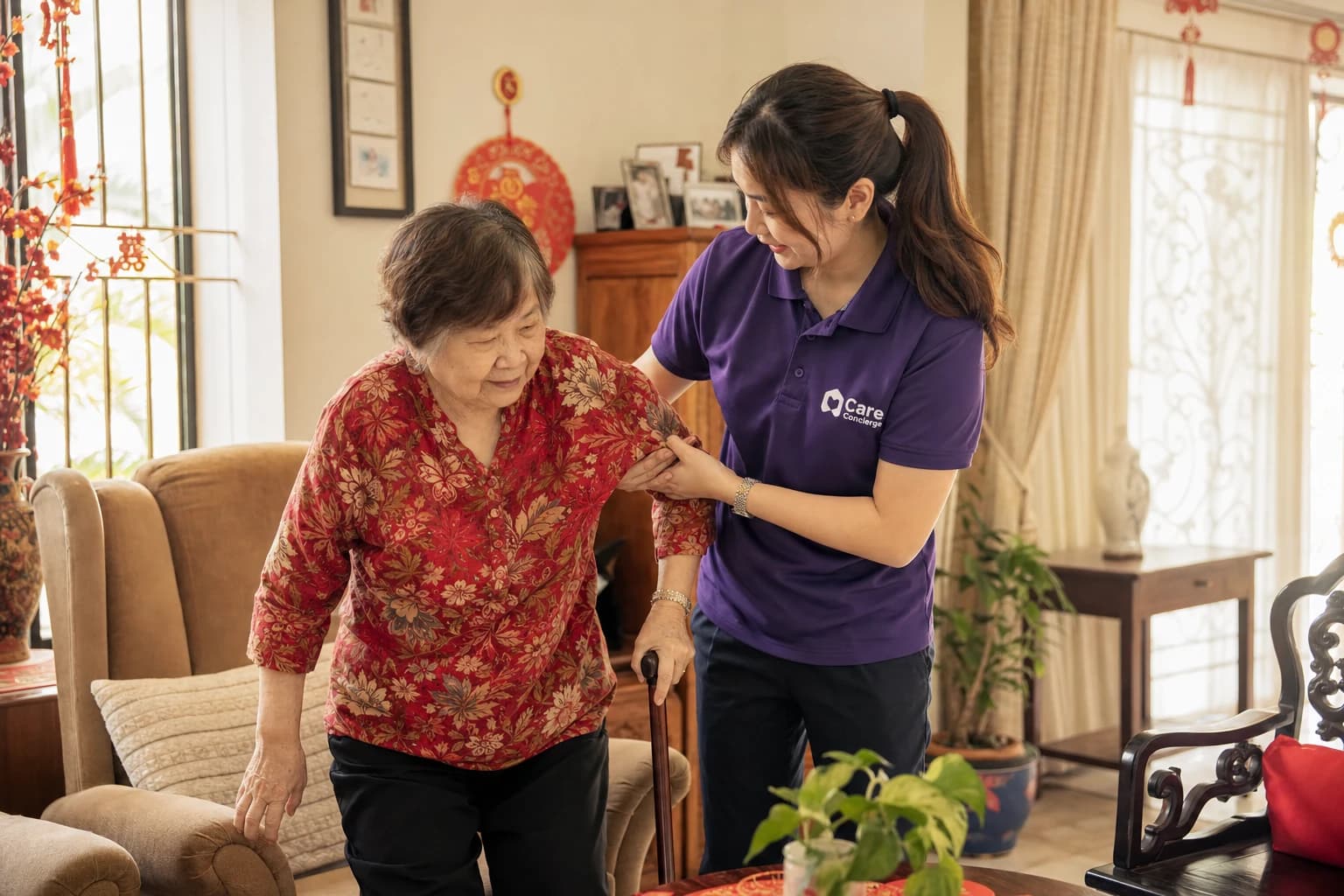
If you're reading this, chances are something has shifted. Maybe your parent had a fall, or you've noticed they're struggling with things that used to come easily - getting dressed, remembering medication, cooking a meal. Maybe you've been managing everything yourself and you're running on fumes. You're not failing. You're looking for answers, and that's exactly the right thing to do.
This guide covers everything Malaysian families need to know about home care services in Malaysia - what's available, what it costs, how to find the right caregiver, and how to take that first step with confidence.
What Are Home Care Services?
Home care services are professional care and support delivered in your loved one's own home, rather than in a hospital or residential facility. Services range from daily living assistance - bathing, meal preparation, medication reminders - to skilled nursing care such as wound management, physiotherapy, and post-surgical rehabilitation. The goal is to help seniors live safely and comfortably in familiar surroundings while receiving the level of care they actually need.
In Malaysia, home care has grown significantly over the past decade as more families look for alternatives to nursing homes. The demand is driven by a simple truth: most seniors want to stay at home, and most families want to make that possible - they just need the right support to do it well.
If your parent mainly needs support during working hours, elderly day care is another option.
Who Needs Home Care?
Home care isn't only for seniors who are bedridden or seriously ill. In practice, families seek home care services across a wide range of situations:
- Ageing parents who need daily support - help with bathing, dressing, mobility, and meal preparation so they can remain at home safely.
- Post-hospital recovery - after surgery, a stroke, or a fall, a trained caregiver or nurse at home can make the difference between a smooth recovery and a hospital readmission.
- Chronic conditions - ongoing support for dementia, Parkinson's, cancer, or diabetes management, where consistent, familiar care matters.
- Respite for family caregivers - when you've been doing it all yourself and you need a break, even if it's just a few days a week.
- Companionship and safety monitoring - for seniors who are largely independent but live alone and need someone checking in regularly.
The common thread is this: your parent's needs have outgrown what the family can manage alone, but a full move to a residential facility isn't necessary - or isn't what they want.
For a deeper look at the signs, situations, and conditions that point toward home-based care, read our guide on elderly care at home in Malaysia.
What Does Home Care Include?
One of the most common questions families ask is: "What exactly will the caregiver do?" The answer depends on the level of care your loved one needs, but home care in Malaysia generally falls into two categories.
Personal Care and Daily Living Assistance
This covers the hands-on, day-to-day support that helps your parent live comfortably:
- Bathing, grooming, and dressing assistance
- Meal preparation tailored to dietary needs
- Medication reminders and management
- Light housekeeping and laundry
- Mobility support (transferring from bed to wheelchair, walking assistance)
- Medical chaperone services (accompanying to doctor's appointments)
- Companionship and cognitive engagement
Skilled Nursing and Specialist Care
For seniors with medical conditions or recovering from hospitalisation, home care can include clinical services delivered by registered nurses or therapists:
- Wound dressing and catheter care
- NGT (nasogastric tube) feeding and suctioning
- Vital sign monitoring
- Physiotherapy and occupational therapy
- Stroke rehabilitation programmes
- Dementia and Alzheimer's support protocols
- Palliative and end-of-life care
At Care Concierge, our care team - drawn from a network of over 2,500 care professionals including caregivers, nurses, and therapists - develops a personalised care plan that evolves as your parent's needs change. It's not a fixed menu. It's a living plan, crafted around your family.
For the full breakdown, see what home care services include. If your parent's situation involves medical or nursing needs specifically, our guide on home nursing care in Malaysia goes deeper.
Home Care vs Nursing Home - How to Decide
This is the question that keeps families up at night. And there's no single right answer - it depends on your parent's medical needs, their personality, your family's capacity, and what resources are available.
Here's how to think about it:
| Factor | Home Care | Nursing Home / Assisted Living |
|---|---|---|
| Environment | Your parent stays in familiar surroundings | Purpose-built facility with 24/7 staff |
| Independence | High - routines stay largely the same | Structured - schedules, communal meals |
| Medical needs | Suitable for mild to moderate; specialist nursing available | Better for complex, round-the-clock medical needs |
| Social interaction | Depends on family and community involvement | Built-in social programmes and peer community |
| Cost structure | Monthly caregiver salary + agency fees | All-inclusive monthly rate |
| Family involvement | Family stays closely involved day-to-day | Facility manages daily care; family visits |
Many families start with home care and transition to assisted living later if needs increase - it doesn't have to be an either-or decision. In fact, providers like Care Concierge offer both home care and assisted living residences, so your parent's care journey can evolve without starting over with a new provider.
We've written a detailed comparison in home care vs nursing home in Malaysia to help you work through the decision.
How Much Does Home Care Cost in Malaysia?
Cost is often the first practical question - and it's understandable. Here's a realistic picture of what Malaysian families can expect.
Typical Price Ranges (2026)
- Live-in caregiver (full-time): RM3,700 to RM6,500 or more a month, depending on the caregiver's qualifications, the complexity of care, and the provider. This typically covers daily living assistance, companionship, and basic health monitoring.
- Stay-out caregiver (daily shifts): RM80–RM200+ per day, depending on shift length and care level.
- Hourly nursing or therapy visits: RM30–RM135+ per hour for registered nurses, physiotherapists, or occupational therapists.
What Affects the Price?
Several factors move the cost up or down:
- Care complexity - a senior who needs help with meals and mobility costs less than one requiring wound care, NGT feeding, or post-stroke rehabilitation.
- Caregiver qualifications - a trained nursing aide commands a different rate than a companion caregiver.
- Hours and schedule - live-in care is typically more cost-effective per hour than hourly booking, but involves a higher monthly commitment.
- Provider model - some providers operate on an hourly gig model, while others like Care Concierge use a concierge model with dedicated, long-term caregivers matched to your family.
- Location - rates in Kuala Lumpur and Petaling Jaya tend to be slightly higher than in Penang or Johor Bahru.
The important thing to understand is that home care isn't one price - it's a spectrum. A good provider will work with you to build a care plan that fits both your parent's needs and your family's budget.
For a detailed cost breakdown including what's included at each price point, read our full guide on the cost of home care in Malaysia.
How to Find the Right Caregiver
This is where many families feel the most anxiety - and for good reason. You're trusting someone with your parent's safety, dignity, and daily wellbeing. Getting this right matters more than anything else.
What to Look for in a Caregiver
- Relevant training - formal certification in elderly care, first aid, and condition-specific skills (dementia care, stroke rehabilitation). Ask the provider about their training programme.
- Experience with your parent's condition - a caregiver experienced in post-stroke care is very different from one who primarily provides companionship. Specificity matters.
- Temperament and compatibility - your parent will spend more time with their caregiver than with anyone else. Personality fit, communication style, and cultural sensitivity are as important as technical skills.
- Background checks and supervision - reputable agencies conduct criminal background checks, verify references, and provide ongoing supervision and performance reviews.
Caregiver vs Maid - Why It Matters
One of the most common mistakes families make is hiring a domestic helper and expecting her to provide elderly care. A maid and a trained caregiver are not the same thing. The difference shows up in emergencies - when your parent falls, chokes, or shows signs of a stroke. It shows up in medication management, in recognising cognitive decline, in knowing how to transfer someone safely from a wheelchair.
If you've been burned by unreliable arrangements before, you're not alone. Read our comparison of caregiver vs maid for elderly care to understand exactly where the lines are.
For a step-by-step approach to finding and evaluating caregivers, see our guide on how to find a caregiver in Malaysia.
Why the Provider Behind the Caregiver Matters
A caregiver is only as reliable as the organisation supporting them. When Care Concierge places a caregiver with your family, that caregiver is backed by a care management team - including nurses, therapists, and a dedicated care coordinator who monitors progress, adjusts the care plan, and provides a replacement if the caregiver is unwell or on leave. This is the concierge model: not a one-off placement, but an ongoing relationship.
Care Concierge was founded in 2017 by Martin Yap, whose own family's struggle to find quality care for his grandmother after a stroke shaped the company's mission. That origin story still drives everything - from how caregivers are trained (through Care Concierge's own academy, in partnership with UTAR) to the company's B Corp certification, which it earned in November 2024 as the first senior care provider in Southeast Asia to receive the designation.
Need help deciding what care your parent needs?
Types of Home Care Arrangements
Home care isn't one-size-fits-all. The right arrangement depends on your parent's care needs, your family's schedule, and your budget.
Live-In Caregiver
A caregiver stays in your parent's home full-time, providing round-the-clock support. This is the most common arrangement for seniors who need consistent daily assistance - especially those living alone or with a spouse who also needs support. Live-in care offers continuity: the same person, every day, building a relationship with your parent.
Stay-Out / Shift-Based Caregiver
A caregiver comes during set hours - typically a 12-hour day shift or 8-hour shift - and returns home in the evening. This works well for families who provide some care themselves (evenings and weekends) but need professional support during working hours.
Hourly / On-Demand Care
Booked by the hour for specific needs - a nursing visit for wound care, a physiotherapy session, or short-term post-hospital support. This model suits families who need targeted clinical interventions rather than full-time companionship.
Respite Care
Temporary care - from a few days to a few weeks - to give the primary family caregiver a break. This is one of the most underused but most important home care options in Malaysia. Caregiver burnout is real, and respite care exists so you can rest without guilt.
Our guide to respite care in Malaysia compares care at home, day care and short stays, with typical costs and a checklist for your parent's stay.
For families considering full-time arrangements, our guide on live-in caregivers in Malaysia covers what to expect, how to prepare your home, and how to manage the relationship well.
Home Care by Location in Malaysia
Availability, pricing, and caregiver supply vary by region. Here's a quick overview of the major markets.
Kuala Lumpur and Petaling Jaya
The largest and most mature home care market in Malaysia. KL and PJ have the widest selection of providers, the most available caregivers, and the most comprehensive service options - including specialist nursing care. Competition is stronger here, which benefits families in terms of choice and service quality. Care Concierge operates across the Klang Valley with full service coverage.
Read more: Home care in KL and Petaling Jaya
Penang
Penang has a growing home care market, driven by its ageing population and the preferences of families in George Town and the wider island. Care Concierge has established operations in Penang, including both home care services and assisted living residences.
Read more: Home care in Penang
Johor Bahru
JB's home care market is developing rapidly, with increasing demand from families in Iskandar Malaysia and the greater JB area. Proximity to Singapore means some families are familiar with professional home care models and expect a similar standard.
Read more: Home care in Johor Bahru
Other States
Care Concierge also provides home care services in Perak (Ipoh), Melaka, and Negeri Sembilan. Availability and caregiver options may differ from the major metro areas, so it's worth discussing your specific location when you enquire.
Specialist Home Care
Some care needs require caregivers or nurses with specific clinical training. The most common specialist home care situations in Malaysia include:
- Post-stroke care - recovery involves physiotherapy, speech therapy, mobility retraining, and emotional support. A generic caregiver isn't equipped for this; you need someone trained in stroke rehabilitation protocols.
- Dementia and Alzheimer's support - managing sundowning, wandering risks, cognitive engagement activities, and communication techniques that reduce agitation.
- Parkinson's care - mobility assistance, fall prevention, medication timing (critical with Parkinson's medications), and tremor management.
- Cancer care - support during and after chemotherapy, managing side effects, nutritional support, and emotional companionship.
- Palliative care - comfort-focused care for terminal diagnoses, pain management support, and family guidance.
- Post-surgical rehabilitation - structured recovery at home after hip replacement, cardiac surgery, or other procedures.
Care Concierge has delivered over 6.6 million hours of care across these specialisations, with caregivers and nurses specifically trained for each condition through the company's own academy programme.
For families dealing with stroke recovery specifically, read our detailed guide on post-stroke care at home in Malaysia.
What to Do Right Now
If you've read this far, you already know your family needs support - even if you haven't said it out loud yet. Here's how to move forward, one step at a time.
1. Write down what your parent needs help with today. Not what they might need in six months - what's happening right now. Bathing? Medication? Mobility? Meal prep? Being alone all day? This list becomes the starting point for any conversation with a care provider.
2. Talk to your parent. This conversation is hard, but it matters. Frame it around what they want - to stay at home, to be safe, to keep their routines. Home care is about preserving their independence, not taking it away.
3. Talk to your siblings. Care decisions shouldn't fall on one person. Share this guide. Align on what's needed, what's affordable, and who's responsible for what.
4. Speak to a care provider. A good provider won't pressure you. They'll ask questions, listen, and help you understand what's possible. At Care Concierge, the first step is a free care consultation - a conversation with a care advisor who assesses your parent's situation and recommends a personalised care plan. No commitment, no hard sell.
5. Start small if you need to. You don't have to commit to full-time, live-in care on day one. Many families start with a few days a week or short-term post-hospital support, and adjust from there.
Take the First Step
You don't have to figure this out alone. Whether you're planning ahead or responding to a crisis, Care Concierge is here to help your family find the right care - at home, on your terms.
Ready to get started? Speak to a care advisor today.
Dive Deeper
Home Care Guide
Elderly Care at Home in Malaysia - A Family Guide
Considering caring for your elderly parent at home in Malaysia? Here's what it involves, when to get help, and how to make it work.

Home Care Guide
Home Nursing Care in Malaysia - Services, Costs & What to Expect
Need medical nursing care at home in Malaysia? Learn what home nursing includes, how it differs from caregiving, and what it costs in 2026.
Home Care Guide
Cost of Home Care in Malaysia (2026) - Honest Price Guide
What does home care actually cost in Malaysia? Hourly rates, live-in packages, nursing care - real 2026 pricing families can plan around.
Home Care Guide
What Does Home Care Include? Services Explained for Families
Not sure what home care actually covers? From personal care to medical support - here's what professional home care services include in Malaysia.
Home Care Guide
Respite Care in Malaysia: How to Take a Break
Respite care looks after your parent so you can rest: a caregiver at home, day care, or a short stay at a residence. Compare the options, costs and how to book.