

Home Care Guide
What Does Home Care Include? Services Explained for Families

Martin Yap
Founder & CEO
Tags
Synopsis
Not sure what home care actually covers? From personal care to medical support - here's what professional home care services include in Malaysia.
Related Articles
Home Care Guide
Home Care Services in Malaysia - The Complete Guide (2026)
Home Care Guide
Elderly Care at Home in Malaysia - A Family Guide
Home Care Guide
Home Nursing Care in Malaysia - Services, Costs & What to Expect
Home Care Guide
Cost of Home Care in Malaysia (2026) - Honest Price Guide
Home Care Guide
Respite Care in Malaysia: How to Take a Break
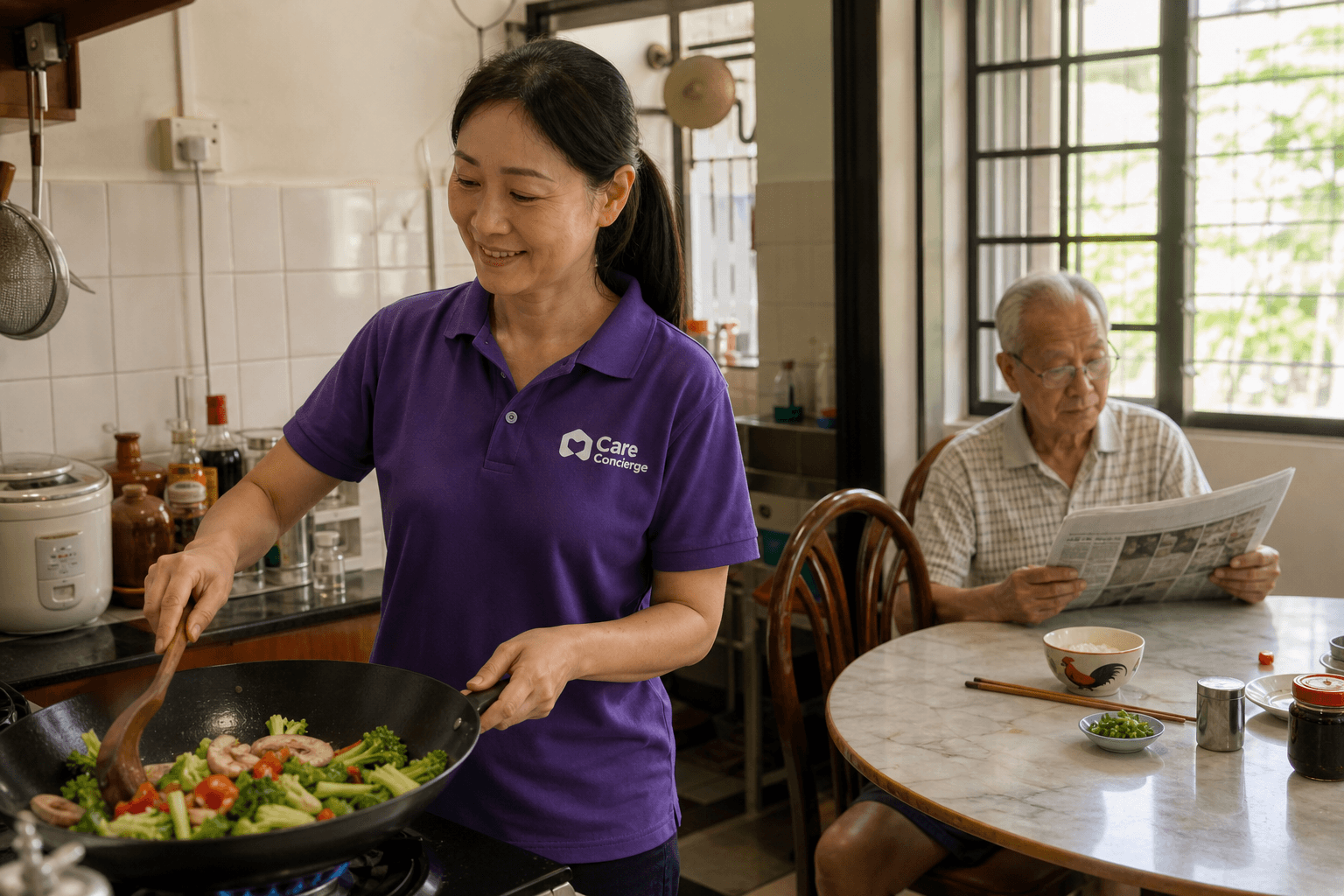
Most families assume home care is either a nurse or a maid. It's actually much more than both.
When you first start exploring home care services for your parent, it's natural to feel unsure about what you're actually signing up for. You might picture someone administering medication - or someone doing housework. The reality sits somewhere broader: professional home care is a structured, personalised support system designed to help your loved one live safely and comfortably at home, with dignity intact.
If you're still working out whether home care is right for your family, our complete guide to home care services in Malaysia covers the bigger picture - from how it works to how families typically get started.
This article focuses on the practical question: what does home care actually include, service by service?
Home Care Services Typically Include:
Professional home care in Malaysia covers a wide range of support, tailored to your loved one's needs:
- Personal care - bathing, grooming, dressing, toileting, and mobility assistance
- Medication management - timely reminders, dosage tracking, and coordination with doctors
- Meal preparation and nutrition - balanced, diet-specific meals prepared at home
- Companionship and mental stimulation - conversation, activities, and emotional support
- Medical and nursing care - wound dressing, vital signs monitoring, NGT feeding, suctioning (read more about nursing care)
- Specialised condition care - dedicated support for stroke recovery, dementia, Parkinson's, cancer, palliative needs, and post-surgical rehabilitation
- Medical chaperone services - accompanying your parent to hospital visits and specialist appointments
- Household support - light housekeeping, laundry, and maintaining a safe living environment
- Family coordination and reporting - regular updates, care logs, and communication with family members
The exact combination depends on your parent's condition, preferences, and daily routine. No two care plans look the same - and that's the point.
Personal Care - What It Actually Means
"Personal care" sounds vague until you see it in action. Here's what a caregiver actually does:
Bathing and grooming. Your caregiver helps your mother shower safely - using a shower chair if needed, managing water temperature, washing hair, and drying off without rushing. For your father recovering from a hip replacement, this might mean a careful bed bath until he's mobile enough for the bathroom.
Dressing and undressing. This includes selecting weather-appropriate clothing, managing buttons or zips that arthritic hands struggle with, and ensuring your parent feels presentable - not just "dressed."
Mobility assistance. Helping your parent move from bed to wheelchair, walking them to the dining table, or accompanying them on a short stroll around the neighbourhood. A trained caregiver knows how to support movement without creating dependency - the goal is always to maintain as much independence as possible.
Toileting support. This is the service families feel most uncomfortable asking about, but it's one of the most important. Trained caregivers handle this with dignity and discretion. For many families, this single service is what made professional care necessary - because it's the hardest thing for a child to do for a parent, and the hardest thing for a parent to accept from a child.
Here's an insider insight: the first thing a good caregiver does isn't a medical check - it's learning your parent's routine and preferences. What time does Mum like her morning tea? Does Dad prefer to eat at the table or in his armchair? These details shape the entire care experience.
Medical vs Non-Medical Home Care
This is a distinction that matters, and most families don't realise it until they're already searching for help.
Non-medical home care covers daily living support: personal care, meal preparation, companionship, household tasks, and mobility assistance. The caregiver is trained in safe handling, nutrition basics, and emergency response - but they're not performing clinical procedures.
Medical home care involves nursing-level interventions: wound dressing, catheter management, NGT (nasogastric tube) feeding, suctioning, vital signs monitoring, and post-surgical rehabilitation. This requires a registered nurse or trained medical professional.
When do you need medical care at home? If your parent has a chronic wound, requires tube feeding, needs regular injections, or is recovering from surgery, you'll need nursing-level support. For a deeper look at medical home care, our guide to home nursing care in Malaysia breaks down the clinical side in detail.
When is non-medical care enough? If your parent is generally stable but needs help with daily activities - showering, meals, getting around the house, taking medication on time - a trained caregiver can handle this well.
Many families need both. A common arrangement in Malaysia is a stay-in caregiver for daily support, with a visiting nurse coming two to three times a week for wound dressing or vital sign checks. Your care plan can blend both types based on what your loved one actually needs.
Specialised Home Care for Specific Conditions
Some conditions require more than general caregiving. Specialised home care means your caregiver or nurse is trained in the specific needs of your parent's condition:
Stroke recovery. Rehabilitation exercises, speech therapy support, fall prevention strategies, and patience - recovery from stroke is measured in months, not days. A caregiver trained in stroke care knows how to encourage progress without pushing too hard.
Dementia and Alzheimer's support. This goes beyond supervision. It includes cognitive stimulation activities, managing sundowning episodes, creating a safe and familiar environment, and - critically - maintaining your parent's sense of identity when memory fades. Dementia caregivers are trained to redirect, not confront. That training makes an enormous difference.
Palliative and cancer care. Comfort-focused care for your loved one during treatment or end-of-life stages. This includes pain management support, emotional companionship, medication coordination, and giving the family space to be family - not full-time medical staff.
Post-surgical rehabilitation. After a hip replacement, heart bypass, or any major surgery, your parent needs supervised recovery at home. This includes wound monitoring, mobility exercises, medication management, and knowing when something isn't healing right.
Care Concierge's caregivers are trained through their academy - a joint programme with UTAR - not just hired. That structured training is what separates professional care from informal arrangements.
What Home Care Doesn't Include
Setting expectations clearly prevents frustration later. Professional home care is not:
A maid service. Your caregiver will keep your parent's living space clean and safe, but they're not there to deep-clean the house, wash the family's laundry, or cook for everyone. Their focus is your loved one - not the household.
A hospital replacement. Home care can manage many medical needs, but if your parent requires 24-hour ICU-level monitoring, ventilator support, or emergency surgical intervention, they need a hospital. Home care works alongside the medical system, not instead of it.
A babysitter. Caregivers are trained professionals, not someone to "watch" your parent while you go out. They follow structured care plans, track health metrics, and coordinate with your family and medical team.
A permanent solution for every situation. Some conditions progress to a point where home care alone isn't sufficient. A good provider will tell you when it's time to consider assisted living or hospital-based care - that honesty is a sign of integrity, not failure.
Understanding these boundaries actually helps you get more from home care. When everyone - family, caregiver, and care provider - is aligned on what the service includes, the care experience is better for your parent.
How a Typical Day Looks with a Home Caregiver
To make this real, here's what a day might look like for your mother with a stay-in caregiver:
7:00 AM - Your caregiver wakes before your mother and prepares the morning routine. Medication is laid out. Warm water is ready.
7:30 AM - She helps your mother to the bathroom, assists with washing up and getting dressed. Your mother prefers her blue cotton baju kurung on Tuesdays - the caregiver knows this.
8:15 AM - Breakfast: soft congee with egg and a cup of Milo, just how she likes it. Her diabetes medication is taken with the meal. The caregiver logs it in the Care Concierge app - you get a notification on your phone at work.
9:30 AM - Light exercises in the living room: gentle stretching, hand grip exercises for her arthritis, a short walk to the garden and back. Twenty minutes, nothing strenuous.
11:00 AM - Companionship time. They might watch a cooking show together, look through old photo albums, or work on a simple jigsaw puzzle. This isn't idle time - it's cognitive stimulation and emotional connection.
12:30 PM - Lunch: steamed fish with vegetables, rice portioned for her dietary needs. The caregiver monitors how much she eats and notes any changes in appetite.
2:00 PM - Afternoon rest. The caregiver uses this time for light housekeeping in your mother's room, laundry, and preparing afternoon medication.
3:30 PM - Tea time. A small snack and her afternoon pills. Maybe a video call with you or the grandchildren.
5:00 PM - A slow walk around the taman if the weather permits. Fresh air and a change of scenery.
6:30 PM - Dinner preparation and the evening routine begins. Medication, a warm shower, comfortable clothes for bed.
8:30 PM - Your mother settles in for the night. The caregiver completes the daily care log - meals eaten, medication taken, mood, mobility, any concerns. You review it on the app before bed.
That's not "just a nurse" or "just a maid." It's a full day of compassionate, structured care designed around one person.
What You Can Do Right Now
If you're reading this, you're probably at the stage where you know your parent needs more support but aren't sure what exactly to ask for. Here's where to start:
- Write down what your parent struggles with today. Bathing? Meals? Medication timing? Mobility? Be specific - this list becomes the foundation of a care plan.
- Note what matters to them personally. Their favourite foods, their morning routine, whether they prefer Mandarin or Bahasa with their caregiver. The best care plans are built around the person, not just the condition.
- Understand the costs. Home care pricing in Malaysia varies by the level of support needed. Our guide to home care costs breaks down what to expect so there are no surprises.
- Talk to a care advisor. At Care Concierge, a care consultation is free and comes with no pressure. A care advisor will walk through your parent's needs, recommend the right type of support - whether that's a stay-in caregiver, visiting nurse, or a combination - and help you understand what's involved.
Speak to a Care Advisor
Describe your parent's situation and a care advisor will respond within 24 hours with a personalised recommendation.
Or explore our home care services: learn more about Care Concierge's at-home care - including how our 2,500+ trained care professionals, caregiver academy, and family monitoring app work together to support your loved one at home.
You don't need to have all the answers. You just need to take the first step.
Dive Deeper
Home Care Guide
Home Care Services in Malaysia - The Complete Guide (2026)
Everything Malaysian families need to know about home care - services, costs, how to choose a caregiver, and what to expect. Updated for 2026.

Home Care Guide
Elderly Care at Home in Malaysia - A Family Guide
Considering caring for your elderly parent at home in Malaysia? Here's what it involves, when to get help, and how to make it work.
Home Care Guide
Home Nursing Care in Malaysia - Services, Costs & What to Expect
Need medical nursing care at home in Malaysia? Learn what home nursing includes, how it differs from caregiving, and what it costs in 2026.
Home Care Guide
Cost of Home Care in Malaysia (2026) - Honest Price Guide
What does home care actually cost in Malaysia? Hourly rates, live-in packages, nursing care - real 2026 pricing families can plan around.
Home Care Guide
Respite Care in Malaysia: How to Take a Break
Respite care looks after your parent so you can rest: a caregiver at home, day care, or a short stay at a residence. Compare the options, costs and how to book.