

Home Care Guide
Elderly Care at Home in Malaysia - A Family Guide

Martin Yap
Founder & CEO
Tags
Synopsis
Considering caring for your elderly parent at home in Malaysia? Here's what it involves, when to get help, and how to make it work.
Related Articles
Home Care Guide
Home Care Services in Malaysia - The Complete Guide (2026)
Home Care Guide
Home Nursing Care in Malaysia - Services, Costs & What to Expect
Home Care Guide
Cost of Home Care in Malaysia (2026) - Honest Price Guide
Home Care Guide
What Does Home Care Include? Services Explained for Families
Home Care Guide
Respite Care in Malaysia: How to Take a Break
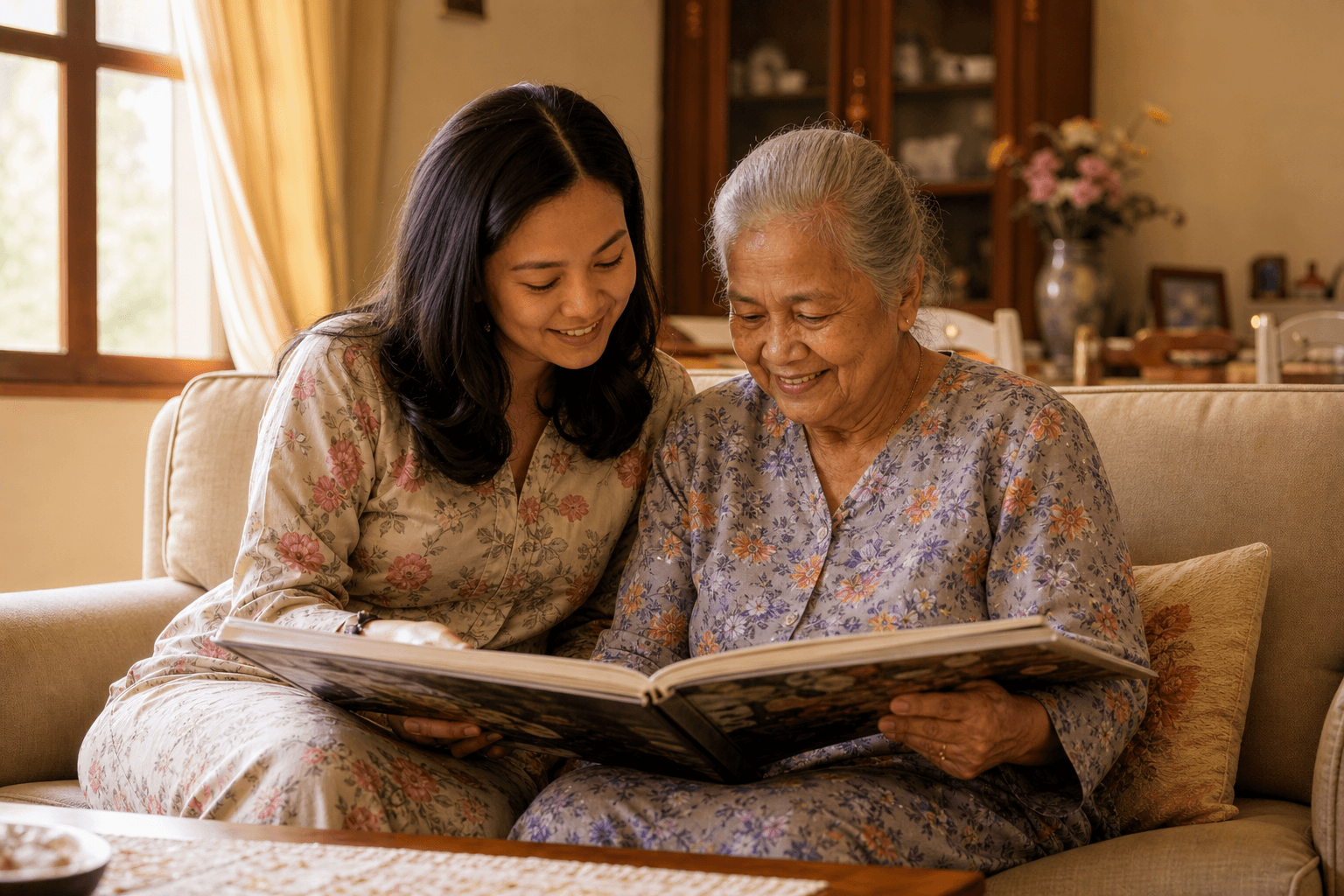
It's probably late. You've just settled your parent into bed - or you're lying in yours, scrolling through your phone, wondering if you're doing enough. If you're reading this, you're already doing more than most people realise. The fact that you're searching for answers about elderly care at home tells me you care deeply - and that you're running out of bandwidth.
You're not alone. Across Malaysia, hundreds of thousands of adult children are quietly carrying the same weight: managing medications, worrying about falls, negotiating with siblings, and trying to hold down a career at the same time. The question isn't whether your parent deserves care at home - it's how to make it work without losing yourself in the process.
This guide walks you through what elderly care at home in Malaysia actually involves - from the early signs that your parent needs more support, to the practical steps for setting things up, to knowing when it's time to call in professionals. If you're exploring the broader landscape, our complete guide to home care services in Malaysia covers the full picture.
Signs Your Parent May Need More Help Than You Can Give
This is the part nobody talks about openly. You visit on the weekend and notice the fridge is full of expired food. Or your parent mentions a fall they "didn't want to bother you about." Or the maid calls you at work - again - because she doesn't know what to do about your father's blood pressure reading.
Here are the signs that caring for elderly parents at home has moved beyond what family and a domestic helper can manage:
- Medication errors are happening. Missed doses, double doses, or confusion about which pills to take when. For parents managing diabetes, hypertension, or heart conditions, this isn't a small thing.
- Mobility has declined noticeably. They're unsteady on their feet, avoiding stairs, or you've noticed bruises they can't explain. Fall risk is one of the leading causes of hospitalisation for seniors in Malaysia.
- Personal hygiene is slipping. This is a sensitive one. If your parent - someone who always took pride in their appearance - is neglecting bathing, grooming, or changing clothes, it often signals either physical difficulty or cognitive change.
- You're getting "the calls" more often. The maid can't cope. Your parent wandered out of the house. They fell in the bathroom. Each call spikes your anxiety and pulls you out of work.
- Your own health is suffering. You're not sleeping. You're short-tempered with your spouse and children. You've cancelled your own medical appointments because there's no time. Caregiver burnout is real, and it doesn't make you weak - it makes you human.
If three or more of these feel familiar, it's not a sign that you've failed. It's a sign that the care needs have grown beyond what one person - or one family - can reasonably handle alone.
Steps to Set Up Elderly Care at Home in Malaysia
Whether you're just starting to think about elder care at home or you're in the thick of it, these steps will help you move from overwhelmed to organised.
- Assess your parent's actual care needs. Sit down - ideally with a doctor or geriatric specialist - and get an honest picture. Can your parent bathe independently? Manage their own medications? Prepare meals safely? Are there specific conditions like stroke recovery, dementia, or Parkinson's that require specialised attention? Write it all down. This assessment becomes your baseline.
- Decide who will provide the care. This is the fork in the road. Your options in Malaysia are broadly three: family members doing it themselves, a domestic helper (maid), or a professional caregiver. Each has trade-offs. A maid costs less but has no medical training - and elderly care is fundamentally different from housework. A professional caregiver is trained in mobility assistance, medication management, and recognising warning signs. We break down the real differences between a caregiver and a maid in a separate guide - it's worth reading before you decide.
- Understand what professional home care actually includes. Many families assume "home care" means someone sitting with your parent. It's far more than that. Professional elderly care at home in Malaysia can include live-in or stay-out caregivers, nursing visits, medication management, meal preparation tailored to dietary needs, physiotherapy, and even medical chaperone services for hospital appointments. For conditions like post-surgical recovery or palliative care, trained nurses can handle wound dressing, NGT feeding, and vital sign monitoring - all from your parent's own bedroom.
- Budget for it realistically. Cost is a real concern, and it deserves a straight answer. Professional home care in Malaysia varies widely depending on the level of care, hours needed, and whether you need a live-in or hourly arrangement. We've put together a detailed breakdown of the cost of home care in Malaysia so you can plan with actual numbers, not guesswork.
- Find the right provider. Not all home care providers are the same. Look for these things: trained and certified caregivers (not just "experienced"), a dedicated care coordinator who manages your parent's plan (not a call centre), transparent communication with the family, and the ability to handle your parent's specific condition. Ask about staff turnover - high turnover means your parent keeps meeting strangers, which is especially distressing for those with dementia. A provider with a concierge model - where one coordinator oversees your parent's entire care journey - will save you from becoming the unpaid project manager of your parent's health.
- Set up the home environment. Before care begins, make the home safer. Install grab bars in the bathroom and along corridors. Remove loose rugs and low furniture that create trip hazards. Ensure adequate lighting, especially at night - a simple motion-sensor night light in the hallway and bathroom can prevent falls. If your parent uses a wheelchair, check doorway widths. A good home care provider will do a home safety assessment as part of onboarding.
When DIY Care Isn't Enough - The Tipping Points
Some situations demand professional hands. This isn't about giving up - it's about giving your parent the right kind of help.
Post-stroke recovery. The first three to six months after a stroke are critical for rehabilitation. Your parent needs consistent physiotherapy, speech therapy, and daily exercises that a trained caregiver can guide. A maid, no matter how well-meaning, cannot do this. We see families lose precious recovery windows because they assumed "rest at home" was enough.
Dementia and Alzheimer's. As cognitive decline progresses, your parent may wander, become agitated, forget to eat, or not recognise family members. Dementia care requires patience, redirection techniques, and safety protocols that come from professional training. It's also emotionally devastating for family members to manage alone - there is no guilt in admitting that.
Parkinson's disease. Mobility challenges, tremors, and swallowing difficulties make daily activities increasingly risky. Falls are common and can lead to fractures that accelerate overall decline.
Post-surgical and palliative care. Hospital discharges in Malaysia often happen faster than families expect. You're sent home with wound care instructions, medication schedules, and follow-up appointments - and suddenly you're a nurse. Professional home care bridges this gap with trained staff who know what to watch for.
Cancer care. Managing pain, nausea, medication schedules, and the emotional toll of treatment requires a level of support that goes beyond what most families can sustain alone, especially over months of treatment cycles.
A professional caregiver spots problems earlier. They're trained to notice subtle changes - a slight increase in confusion, a new difficulty swallowing, a shift in mood - that family members often miss because they see their parent every day. Early detection of these changes can prevent hospitalisations and significantly improve outcomes.
Not sure if your parent needs professional care?
What Professional Elderly Care at Home Actually Looks Like
It helps to know what a day with a professional caregiver actually involves. Here's what it typically looks like for a live-in caregiver managing care for a parent recovering from a stroke:
Morning (7:00–9:00 AM). The caregiver assists your parent with waking, oral hygiene, bathing, and dressing. They check vital signs - blood pressure, blood sugar if diabetic - and log everything in a care app that you can check from your phone. Breakfast is prepared according to dietary requirements (low sodium, soft diet, or diabetic-friendly).
Mid-morning (9:00–12:00 PM). Guided physiotherapy exercises as prescribed by the rehabilitation specialist. Light activities to keep your parent engaged - reading, conversation, a short walk in the garden if mobility allows. Medication administered on schedule.
Afternoon (12:00–3:00 PM). Lunch, followed by a rest period. The caregiver uses this time to update the care log, tidy the care space, and prepare for the afternoon routine. If there's a medical appointment, the caregiver accompanies your parent as a medical chaperone - they can communicate your parent's condition to the doctor accurately, which is something a maid or Grab driver cannot do.
Evening (3:00–8:00 PM). Afternoon tea, light exercise or stretching, dinner preparation. The caregiver manages the evening medication round and assists with changing into night clothes. They'll note any changes in appetite, mood, or physical condition.
Night. For live-in arrangements, the caregiver is available for nighttime assistance - toileting, repositioning to prevent pressure sores, or responding if your parent is disoriented.
Throughout the day, you receive updates through a mobile app. You're informed, but you're not the one doing it all. That shift - from being the sole caregiver to being the person who oversees care - is what allows you to be a daughter or son again, not just a carer.
What You Can Do Right Now
You don't have to solve everything tonight. But you can take one step:
- Write down your parent's care needs. Use the assessment checklist in Step 1 above. Be honest about what's working and what isn't.
- Have the conversation with your siblings. Share this article if it helps frame the discussion. Care decisions shouldn't fall on one person alone.
- Talk to a professional. Even if you're not ready to commit, a consultation with a home care provider can give you clarity on options and costs. A good provider won't pressure you - they'll help you think through what your parent actually needs.
- Stop carrying the guilt. Seeking professional help for your parent isn't abandoning them. It's making sure they get the standard of care they deserve - from people trained to deliver it - while you get to be their child again.
Take the First Step
If you've read this far, you're already further along than most families. You don't need to have all the answers right now.
Care Concierge has supported over 2,500 families across Malaysia with personalised at-home care - from live-in caregivers to specialised nursing for stroke, dementia, and palliative care. Founded in 2017, with more than 6.6 million hours of care delivered and Southeast Asia's first B Corp certification in senior care, the focus has always been one family at a time.
Every care journey starts with a conversation. A dedicated care coordinator will listen to your situation, assess your parent's needs, and walk you through the options - with no obligation.
Ready to get started? Every care journey begins with a conversation.
Dive Deeper
Home Care Guide
Home Care Services in Malaysia - The Complete Guide (2026)
Everything Malaysian families need to know about home care - services, costs, how to choose a caregiver, and what to expect. Updated for 2026.

Home Care Guide
Home Nursing Care in Malaysia - Services, Costs & What to Expect
Need medical nursing care at home in Malaysia? Learn what home nursing includes, how it differs from caregiving, and what it costs in 2026.
Home Care Guide
Cost of Home Care in Malaysia (2026) - Honest Price Guide
What does home care actually cost in Malaysia? Hourly rates, live-in packages, nursing care - real 2026 pricing families can plan around.
Home Care Guide
What Does Home Care Include? Services Explained for Families
Not sure what home care actually covers? From personal care to medical support - here's what professional home care services include in Malaysia.
Home Care Guide
Respite Care in Malaysia: How to Take a Break
Respite care looks after your parent so you can rest: a caregiver at home, day care, or a short stay at a residence. Compare the options, costs and how to book.