

- Home care vs nursing home: the side-by-side comparison
- What home care and residences cost in Malaysia
- Four questions to help you decide
- When home care makes more sense
- When a nursing home makes more sense
- What to ask a nursing home about registration
- The options in between
- If your parent has dementia
- How to make the decision as a family
- Where Care Concierge fits
- What you can do this week
- Sources
Care Decisions
Home Care vs Nursing Home in Malaysia
How to Decide

Martin Yap
Founder & CEO
Tags
Synopsis
Home care or a nursing home? Take the four-question check, compare care side by side, and see typical Malaysian costs for each, checked October 2026.
Related Articles
Care Decisions
Caregiver vs Maid for Elderly Care: Why Hiring a Helper Isn't the Same
Care Decisions
How to Choose a Nursing Home in Malaysia
Care Decisions
Elderly Day Care in Malaysia: 2026 Fees, Centres
Home Care Guide
Home Care Services in Malaysia - The Complete Guide (2026)
Home Care Guide
Elderly Care at Home in Malaysia - A Family Guide

Care at home usually fits when your parent's nights are calm, the home is safe or easy to make safe, the family carer has support, and your parent wants to stay. A residence usually fits when your parent needs hands-on help through the night, the home cannot be made safe, or the family carer cannot keep going. Many families land in between, with care at home plus day care or short stays.
A few hours of care at home a week costs less than a month in a care home, while someone awake beside your parent all night costs more at home than in most private care homes.
If you're the one weighing this, it's a heavy decision to carry. Getting help isn't giving up.
Home care or a residence at a glance
Typical market rates in Malaysia, checked October 2026. Not Care Concierge's prices.
Care at home suits
Calm nights, a safe home, a family carer with support, and a parent who wants to stay
A residence suits
Hands-on help through the night, a home that cannot be made safe, or a carer who cannot keep going
In between
Care at home plus day care on weekdays, or short stays at a residence
Part-time care at home
About RM1,560 to RM2,860 a month for three 4-hour visits a week
Private care home
RM1,500 to RM5,900 a month in published price lists
Care awake all night at home
Two caregivers on shifts: RM17,000 or more a month
Home care vs nursing home: the side-by-side comparison
Care Concierge publishes this guide and provides both care at home and residences, so we have an interest in either answer. The table compares types of care, not providers. It covers care at home (a part-time or live-in caregiver, with nurse visits when needed) and residential care (care homes, assisted living and nursing care). It leaves out government homes, which admit seniors who qualify by application, and domestic helpers, which our guide to caregiver vs maid for elderly care covers. In Malaysia, "nursing home" and "care home" are used loosely for most residential care, and homes differ in how much nursing they give, so ask each one what is covered by day and by night.
| What you're comparing | Care at home | Residence (care home or assisted living) |
|---|---|---|
| Where your parent lives | In their own home | In a residence, in a shared or private room |
| Who gives the care | One caregiver at a time, part-time or live-in; a nurse or physiotherapist visits when needed | A team of caregivers shared among residents; nurse cover differs from home to home |
| Nights | A live-in caregiver sleeps there but needs rest; someone awake all night means two caregivers on shifts | Caregivers on duty through the night; ask how many, and whether a nurse is on site or on call |
| How you pay | By the hour, day or month, plus the household's food, utilities and equipment | One monthly fee for room, meals and daily care, plus listed extras |
| Daily routine | Your parent's own routine, food and prayer times | The home's timetable for meals and activities, with some flexibility |
| Company | Depends on family, visitors and outings | Other residents and daily activities in the home |
| Your role | You stay closely involved, and you manage the household and cover for days the caregiver is off, unless an agency sends a replacement | The home runs the care; you visit and keep in touch with the team |
| When needs change | Hours go up or down, from a few hours a week to a live-in caregiver | Moving in takes planning; ask whether your parent can stay if their needs increase |
| Best for | A parent who wants to stay home, needs little help at night, and lives somewhere safe or easy to make safe | A parent who needs help day and night, is unsafe or lonely at home, or whose family carer can't keep going |
What home care and residences cost in Malaysia
These are typical market rates and published examples, taken from prices Malaysian providers publish and checked in October 2026. They are not Care Concierge's prices. Your parent's quote depends on the care they need, the hours and the city.
| Type of care | What it covers | Typical market rate or published example |
|---|---|---|
| Part-time caregiver (agency) | Help with bathing, meals, medication reminders and company for a few hours | RM30 to RM55 an hour in the Klang Valley, from RM24 in Penang |
| Live-in caregiver (agency) | A trained caregiver who lives in your parent's home, with rest days | From RM3,700 to RM6,500 or more a month |
| Round-the-clock care at home | Two caregivers sharing 24-hour cover | Billed by the hour, 24-hour shifts come to RM17,000 or more a month |
| Home nursing visit | A nurse for wound care, tube changes or other procedures | RM160 to RM325 a visit |
| Private care home | Room, meals and daily care, with higher fees for higher care levels | RM1,500 to RM5,900 a month in published price lists: a shared room RM2,000 to RM4,500 or more, a private room RM2,150 to RM5,900 |
What a month of care can cost
Typical market rates and published price lists in Malaysia, checked October 2026. Not Care Concierge's prices.
Part-time caregiver, three 4-hour visits a week
About RM1,560 to RM2,860
Care home, shared room
RM2,000 to RM4,500 or more
Care home, private room
RM2,150 to RM5,900
Live-in caregiver
RM3,700 to RM6,500 or more
Round-the-clock care at home, two caregivers
RM17,000 or more
The cheaper option depends on the hours your parent needs. Three 4-hour visits a week at RM30 to RM55 an hour come to about RM1,560 to RM2,860 a month, about the same as a shared room in a private care home. Someone awake beside your parent all night costs more at home than any private care home fee in the table. Care at home also leaves the household's food, utilities and equipment with the family. A residence fee bundles more, but homes often bill diapers, medicines, physiotherapy and clinic trips on top, so ask what each fee includes. Compare two written quotes for the same needs and hours. Our guides to the cost of home care and nursing home fees in Malaysia go through each in detail.
Four questions to help you decide
Answer four questions, in this order: how much help your parent needs at night, whether the home is safe, whether the family carer can keep this up, and what your parent wants. Answer them with whoever shares the decision. If you're not sure how much help your parent needs day to day, the free Barthel Index assessment scores ten everyday activities, such as bathing, dressing and walking, and gives you something concrete to discuss.
Fit check
Home care or a residence: check the fit
Answer the four questions. All three options stay below, and the best fit for your answers moves to the top.
Your three options
Care at home
Fits when: Nights are calm, the home is safe or easy to make safe, the family carer has support, and your parent wants to stay.
See care at homeA mix: home care plus day care or short stays
Fits when: Your parent can stay home for now, but the family carer needs regular breaks or daytime cover.
Read about the options in betweenA residence
Fits when: Your parent needs hands-on help through the night, the home cannot be made safe, or the family carer cannot keep going.
Compare residences
This check is a starting point. A care team should assess your parent before you decide.
Start with nights and the family carer. If your parent needs hands-on help through the night, care at home means two caregivers on shifts; if the carer is already worn out, adding hours at home only delays the question. Go back to the check whenever your parent's needs change.
When home care makes more sense
Care at home tends to fit when the four questions come out on the home side, and in these situations:

- Your parent wants to stay in their own home, and their nights, safety and carer support allow it. Their wish should carry real weight.
- Your parent is recovering after a hospital stay, such as after a stroke or surgery. With the doctor's agreement, a caregiver plus a visiting nurse or physiotherapist can cover this at home.
- Your family wants to stay part of the daily rhythm and oversee meals, medication and routines.
- If food and prayer times matter to your parent, at home they eat what they have always eaten and keep their own prayer times.
- Needs are changing and you're not sure what next month looks like. Care at home can grow from a few hours a week to a live-in caregiver.
For what a caregiver does day to day, see what home care includes. If your parent needs someone there most of the day, our guide to a live-in caregiver in Malaysia covers how that arrangement works, and our guide to home care services in Malaysia covers the wider options.
When a nursing home makes more sense
If moving your parent feels like abandoning them, you're not alone in that worry. A residence tends to fit in these situations:
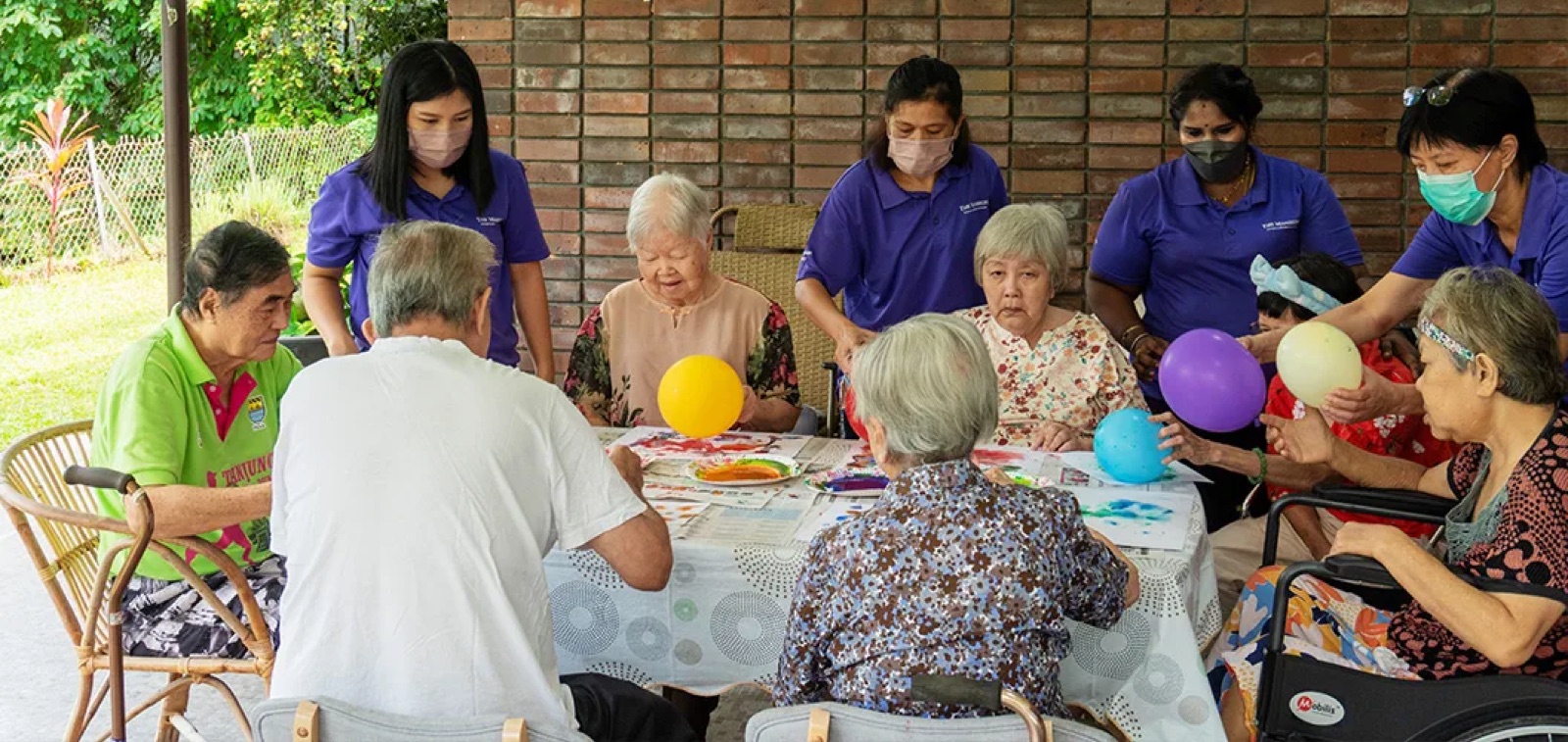
- Your parent needs care day and night. The UK's NHS names a complex medical condition that needs specialist attention during the day and night as one reason a care home may be the best option. Ask each residence whether a nurse is on site at night, or only on call.
- Your parent is lonely at home, perhaps living alone or since a spouse died. A residence gives company and a set day. At The Mansion, one of our residences, for example, the day starts with a vitals check and breakfast, then exercise and a walk, with cognitive activities after lunch, then tea.
- The home can't be made safe: stairs with no lift, a bathroom with no room for grab rails, or a long way from a hospital.
- The family carer is running out of strength. If your own health, work or family is suffering, a residence takes over the daily care, so your visits are family time.
- Your parent needs several professionals, such as a nurse, a physiotherapist and caregivers. Arranging them all at home is hard work; some residences have them on the team, so ask which.
What to ask a nursing home about registration
Ask to see two things. Every home that takes in four or more people to live there and receive care must be registered with the Department of Social Welfare (JKM) under the Care Centres Act 1993, and its certificate lasts five years. A home that gives nursing care, from registered nurses under a doctor's directions, is a private nursing home and needs a Ministry of Health licence under the Private Healthcare Facilities and Services Act 1998.
Registration does not tell you who is on duty at night, so ask that too. Our guide on how to choose a nursing home in Malaysia explains both checks and has a visit checklist to take with you.
The options in between
Between care at home and a move, you have four options:
- Part-time care at home brings a caregiver for a few hours a day or a few days a week, for bathing, meals or company while you work.
- With day care, your parent spends the working day at a centre with caregivers, meals and activities, then sleeps at home. Our guide to elderly day care in Malaysia explains who it suits.
- Respite care, or a short stay, means days or weeks in a residence while the family rests or travels, or after a hospital stay. It is also a fair trial of residential life. Read more on respite care in Malaysia.
- Assisted living is a residence with caregivers round the clock, supported by nurses, for a parent who needs help with daily activities. Our article debunking common myths about assisted living answers the usual worries.
You can combine these. For example, a caregiver comes in the mornings and your parent goes to day care on weekdays, or a live-in caregiver stays at home and your parent has a short stay at a residence when the family needs a break.
If your parent has dementia
The right answer can change as dementia progresses. Alzheimer's Society puts it plainly: each person's situation is different, and there isn't a time that's right for everyone. Its main question is what is in the best interests of the person you care for.
Go back to the four questions whenever things change. While your parent can follow a steady routine at home, care at home and day care may be enough. If your parent starts to wander, wake through the night or need watching all day, questions 1 and 3 will usually decide the next step. Our guide to dementia care at home in Malaysia covers routines, home safety and help at each stage.
How to make the decision as a family
- Write down your parent's needs. List what they can do alone, what they need help with, and what happens at night. Bring their latest discharge summary or doctor's letter to every conversation with a provider.
- Have the money conversation. Agree a monthly budget with your siblings, who pays what, and how you'll cover care that may increase over time.
- Ask your parent what they want. They are the one living with the decision.
- Try before you commit. Ask a home care provider about a trial week, and ask a residence about a short stay.
Where Care Concierge fits
Care Concierge runs both kinds of care, so a Care Advisor can price care at home and a residence for the same needs and set the two quotes side by side. From our own service and residence pages:
Care at home
Part-time or live-in caregivers, nurse visits and therapy, in Penang, Perak, Kuala Lumpur, Selangor, Melaka, Negeri Sembilan and Johor. See care at home.
The Mansion, Petaling Jaya and Kuala Lumpur
Bungalow homes in Petaling Jaya with a senior nurse on site; Gasing 136 has a dedicated dementia care section. The Mansion Ampang is 50 metres from Gleneagles Hospital and takes short and long stays. See The Mansion or The Mansion Ampang.
Penang
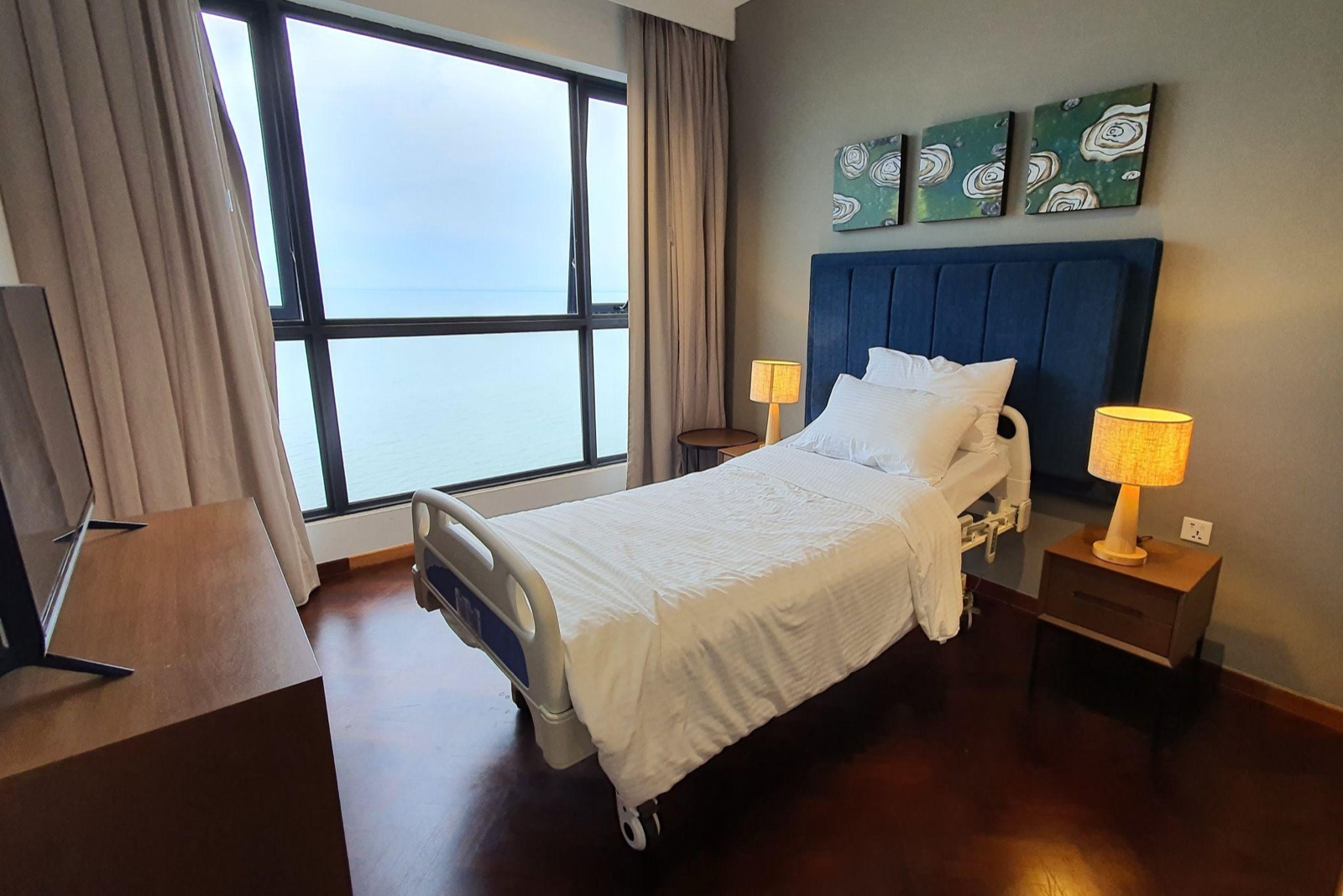
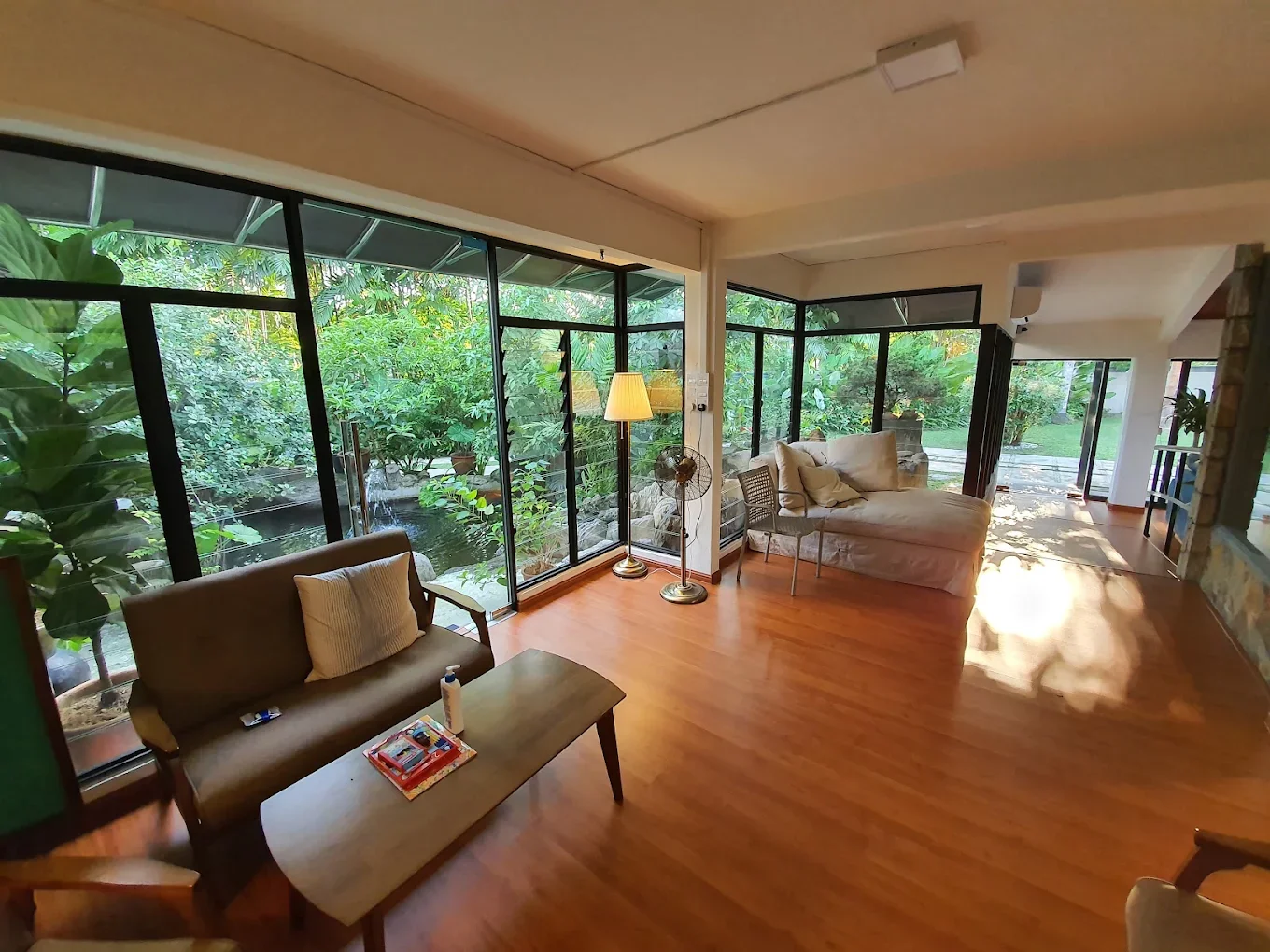
Sea-view suites at Tanjung Point Residences, with respite suites for short stays, and a bungalow at Angsana Home in Tanjung Bungah with day care and sharing, double and single rooms.
What you can do this week
- Answer the four questions in the check above with whoever shares the decision, and send them this page so everyone starts from the same facts.
- Get two written quotes for the same needs and hours: one for care at home and one from a residence.
- Book one visit to a residence, at a meal time if you can, so you see an ordinary day.
When you're ready, a Care Advisor can talk you through both options side by side and change the plan as your parent's needs change, from part-time care at home to day care, a short stay or a move. Talking it through commits you to nothing.
Not sure which suits your parent? Talk it through with us.
Sources
Market rates were checked in October 2026 on providers' published price pages and one Malaysian market roundup (Jasper Lodge). Registration facts were checked on 22 October 2026.
- NHS: Care homes
- Alzheimer's Society: When is the right time to move someone into care?
- Homage: home care in KL and Selangor (hourly rates and 24-hour shifts)
- Homage: home care in Penang (hourly rates)
- iElder.Asia: caregiver rates
- Jasper Lodge: home care rates in Kuala Lumpur
- WhereWeCare: live-in caregiver pricing
- FaMGuard@Home: stay-in caregiver pricing
- Sunway Home Healthcare: home nursing packages
- JKM: care centre registration guide, Care Centres Act 1993 (Act 506)
- Ministry of Health, CKAPS: FAQ on Act 586 and private nursing homes
- Genesis Life Care: published care packages
- Seavoy Nursing Home: pricing
- Spring Valley Homecare: fees
- IG Care Centre: fees
Dive Deeper
Care Decisions
Caregiver vs Maid for Elderly Care: Why Hiring a Helper Isn't the Same
Every Malaysian family's first instinct is to hire a maid when a parent starts slowing down. Here's when that works - and when it doesn't.

Care Decisions
How to Choose a Nursing Home in Malaysia
How to choose a nursing home or retirement home in Malaysia: match the care level, check JKM and Ministry of Health registration, and use our visit checklist.
Care Decisions
Elderly Day Care in Malaysia: 2026 Fees, Centres
Elderly day care in Malaysia costs about RM70 to RM180 a day at centres that publish rates. See a typical day, who it suits, dementia care and free JKM centres.
Home Care Guide
Home Care Services in Malaysia - The Complete Guide (2026)
Everything Malaysian families need to know about home care - services, costs, how to choose a caregiver, and what to expect. Updated for 2026.
Home Care Guide
Elderly Care at Home in Malaysia - A Family Guide
Considering caring for your elderly parent at home in Malaysia? Here's what it involves, when to get help, and how to make it work.