

Home Care Guide
Home Nursing Care in Malaysia - Services, Costs & What to Expect

Martin Yap
Founder & CEO
Tags
Synopsis
Need medical nursing care at home in Malaysia? Learn what home nursing includes, how it differs from caregiving, and what it costs in 2026.
Related Articles
Home Care Guide
Home Care Services in Malaysia - The Complete Guide (2026)
Home Care Guide
Elderly Care at Home in Malaysia - A Family Guide
Home Care Guide
Cost of Home Care in Malaysia (2026) - Honest Price Guide
Home Care Guide
What Does Home Care Include? Services Explained for Families
Home Care Guide
Respite Care in Malaysia: How to Take a Break
The call usually comes without warning. Your father has had a stroke, or your mother is being discharged after surgery, and the doctor says, "She can go home - but she'll need nursing care."
You nod. You sign the paperwork. And somewhere between the hospital corridor and the car park, the reality hits: home is not ready for this.
If you are in that moment right now - or you can feel it coming - this guide is for you. We will walk through what home nursing care actually involves, how it differs from everyday caregiving, what services are available in Malaysia, and what it might cost your family. If you are still exploring the full range of home care services in Malaysia, start there for the broader picture. This article focuses specifically on the nursing side.
What Is Home Nursing Care?
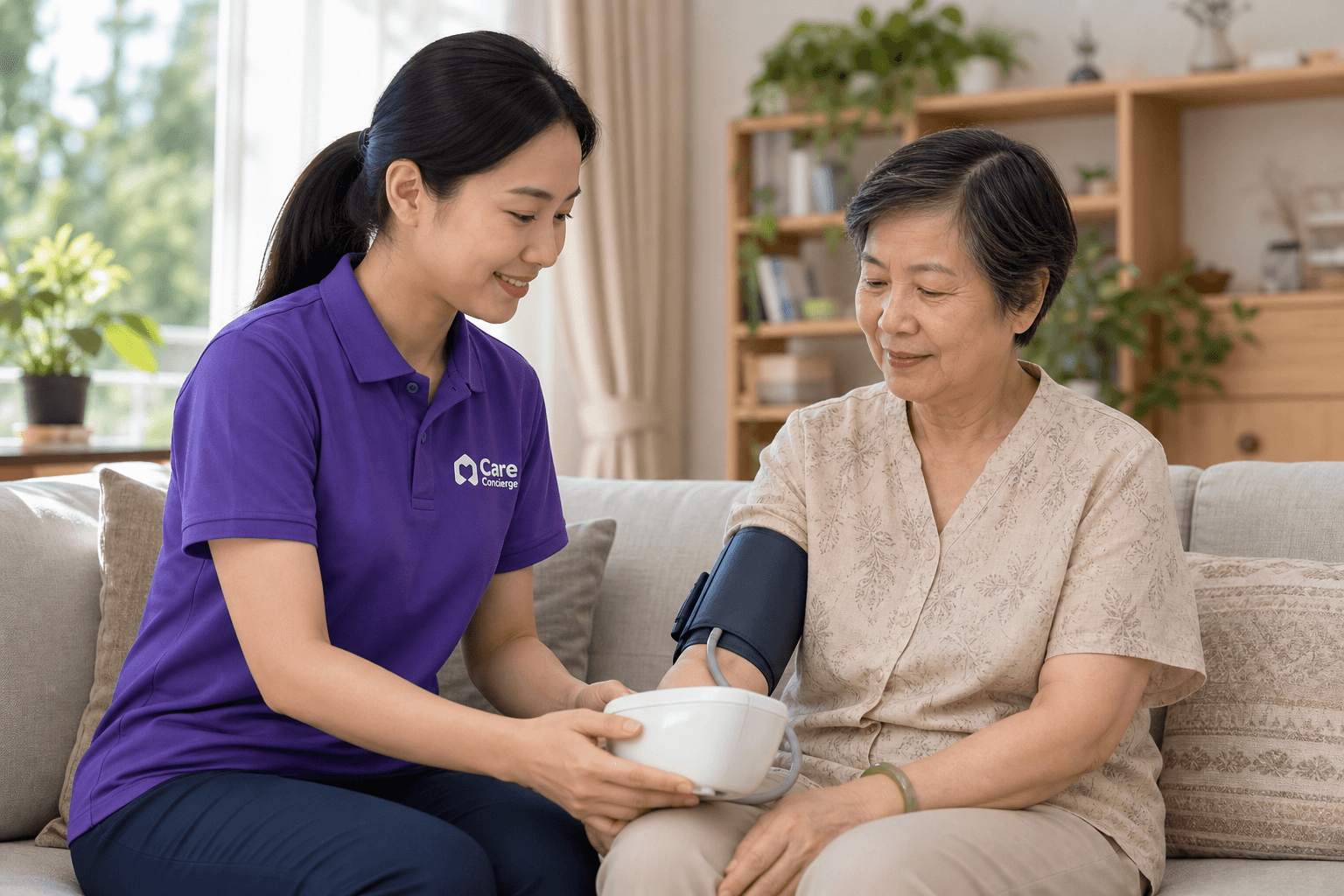
Home nursing care is the delivery of professional medical and nursing services - such as wound dressing, medication management, vital sign monitoring, and tube feeding - in your loved one's own home, supervised by qualified nurses rather than in a hospital or care facility.
In practice, it means a registered or enrolled nurse visits your parent's home (or stays with them) to carry out clinical tasks that a caregiver without medical training cannot safely perform. These are the same procedures that would happen in a hospital ward - but delivered in the comfort of a familiar bedroom, with family close by.
Demand for home nursing in Malaysia has been growing steadily. Malaysia's population aged 65 and above is projected to reach 15% by 2040, and many families prefer to keep their loved ones at home rather than in institutional care. The challenge is that ageing at home with a medical condition requires more than companionship and daily living help - it requires clinical skill.
Home Nursing vs Home Caregiving - What's the Difference?
This is one of the most common points of confusion for families. Both involve someone coming to the home to help your loved one, but they serve very different purposes.
| Home Nursing | Home Caregiving | |
|---|---|---|
| Who provides it | Registered or enrolled nurse | Trained caregiver |
| Scope of work | Medical and clinical procedures | Daily living assistance |
| Typical tasks | Wound care, NGT feeding, suctioning, injections, vital sign monitoring | Bathing, meal preparation, companionship, mobility support |
| When it's needed | Post-surgery, chronic illness management, palliative care | General ageing support, mild cognitive decline, loneliness |
| Supervision | Doctor-supervised care plans | Care manager oversight |
| Regulation | Must hold valid nursing qualification (Malaysian Nursing Board) | No mandatory clinical certification required |
Many families eventually need both - a caregiver for the everyday rhythm of life (meals, bathing, companionship) and a nurse for the medical tasks that require clinical training. The two roles complement each other, and a good home care provider will help you work out the right combination.
What Home Nursing Services Include
Home nursing is not a single service - it is a category of clinical interventions that can be tailored to your loved one's condition. Here is what a qualified home nurse can typically provide in Malaysia:
- Wound dressing and post-surgical wound management. Keeping surgical sites or chronic wounds clean, dressed, and monitored for signs of infection - especially important after hospital discharge.
- Nasogastric tube (NGT) feeding. For loved ones who can no longer swallow safely, a nurse manages tube feeding to ensure proper nutrition and hydration, and monitors for complications.
- Suctioning. Airway clearance for those who have difficulty managing secretions, common after stroke or in advanced neurological conditions.
- Vital sign monitoring. Regular checks on blood pressure, heart rate, oxygen saturation, temperature, and blood glucose levels - providing early warning if something changes.
- Medication management and administration. Organising complex medication schedules, administering injections, and watching for adverse reactions or drug interactions.
- Post-stroke rehabilitation support. Working alongside physiotherapists and occupational therapists to support recovery milestones at home, including mobility exercises and cognitive stimulation.
- Palliative and end-of-life nursing. Comfort-focused care for loved ones with terminal diagnoses - managing pain, maintaining dignity, and supporting the family emotionally through the final chapter.
- Cancer care support. Monitoring side effects of chemotherapy or radiation, managing central lines or ports, and coordinating with the oncology team.
Care Concierge's network of over 2,500 care professionals - including nurses and therapists - provides these services across Penang, Perak, Kuala Lumpur, Selangor, Melaka, Negeri Sembilan, and Johor. Each care plan is personalised to your loved one's medical needs, not pulled from a template.
When Your Parent Needs a Nurse, Not Just a Caregiver
Sometimes the line is obvious - your mother has an open surgical wound that needs daily dressing. Other times, the shift happens gradually, and families don't realise they have crossed into territory that requires nursing-level care.
Here are the tipping points to watch for:
- Recent hospital discharge with open wounds or surgical sites that require sterile dressing changes.
- Tube feeding - your loved one has a nasogastric tube (NGT) or PEG tube and cannot eat by mouth.
- Airway management - they need regular suctioning or oxygen support.
- Complex medication regimens - multiple medications with specific timing, interactions, or injectable formats.
- Deteriorating vital signs - blood pressure swings, oxygen drops, or blood glucose instability that needs daily clinical monitoring.
- Palliative care needs - pain management, symptom control, and comfort care for a terminal diagnosis.
- Post-stroke or post-surgical rehabilitation - recovery that involves clinical exercises, not just companionship.
If any of these sound familiar, it may be time to bring a qualified nurse into your home care arrangement. This is not a failure - it is the responsible next step. Families who recognise the tipping point early tend to see better outcomes and experience less burnout themselves. For families navigating stroke recovery specifically, our guide to post-stroke care at home in Malaysia covers what the first 90 days typically look like.
Not sure if your parent needs a nurse or a caregiver?
How Much Does Home Nursing Cost in Malaysia?
Cost is almost always the first practical question families ask - and it is a fair one. Home nursing pricing in Malaysia varies depending on the type of service, hours required, and the complexity of your loved one's condition.
Here are some general market ranges to help you plan:
- Hourly nursing visits: From approximately RM36 per hour for a qualified nurse, depending on the provider and location.
- Extended or package-based nursing care: Some providers offer structured packages - for example, from approximately RM4,600 for 20 days of doctor-managed nursing, though this may be limited to certain regions such as Selangor.
- Live-in nursing arrangements: Pricing varies significantly based on the nurse's qualifications, the care complexity, and whether 24-hour coverage is needed.
Factors that affect cost:
- Frequency of visits (daily vs. a few times per week)
- Hours per visit or whether live-in care is required
- Medical complexity (wound care only vs. multi-system monitoring)
- Location (urban Klang Valley pricing may differ from other states)
Care Concierge does not publish fixed pricing because every family's situation is different. A care advisor will assess your loved one's needs and recommend a personalised plan with transparent costs - no surprises. For a more detailed breakdown of home care costs across different service types, see our full guide on the cost of home care in Malaysia.
What You Can Do Right Now
If you have read this far, you are already doing the right thing - learning what your loved one needs before the situation becomes urgent. Here are three steps you can take today:
- Write down your loved one's current medical needs. List their conditions, medications, any equipment they use (oxygen, feeding tubes), and recent hospital visits. This becomes your briefing document when you speak to a care provider.
- Ask the hospital for a discharge care plan. If your parent is currently hospitalised or recently discharged, request a written summary of their care requirements at home. This helps a home nursing provider match the right nurse to your family.
- Speak to a care advisor. A short conversation can clarify whether your loved one needs a nurse, a caregiver, or both - and what that looks like in practice. Care Concierge's care advisors are available to talk through your situation with no obligation.
You do not have to figure this out alone. Care Concierge has delivered over 6.6 million hours of care and is Southeast Asia's first B Corp-certified senior care provider - built on the belief that every family deserves a trusted partner when care gets complicated.
Ready to arrange home nursing care for your loved one?
Dive Deeper
Home Care Guide
Home Care Services in Malaysia - The Complete Guide (2026)
Everything Malaysian families need to know about home care - services, costs, how to choose a caregiver, and what to expect. Updated for 2026.

Home Care Guide
Elderly Care at Home in Malaysia - A Family Guide
Considering caring for your elderly parent at home in Malaysia? Here's what it involves, when to get help, and how to make it work.
Home Care Guide
Cost of Home Care in Malaysia (2026) - Honest Price Guide
What does home care actually cost in Malaysia? Hourly rates, live-in packages, nursing care - real 2026 pricing families can plan around.
Home Care Guide
What Does Home Care Include? Services Explained for Families
Not sure what home care actually covers? From personal care to medical support - here's what professional home care services include in Malaysia.
Home Care Guide
Respite Care in Malaysia: How to Take a Break
Respite care looks after your parent so you can rest: a caregiver at home, day care, or a short stay at a residence. Compare the options, costs and how to book.