

Hiring & Caregivers
How to Find a Caregiver in Malaysia - A Family Guide

Martin Yap
Founder & CEO
Tags
Synopsis
Looking for a caregiver in Malaysia? Here's how to find, evaluate, and hire the right caregiver for your elderly parent - from agencies to freelance.
Related Articles
Hiring & Caregivers
Live-In Caregiver in Malaysia - Is It Right for Your Parent?
Home Care Guide
Home Care Services in Malaysia - The Complete Guide (2026)
Home Care Guide
Elderly Care at Home in Malaysia - A Family Guide
Care Decisions
Home Care vs Nursing Home in Malaysia: How to Decide
Home Care Guide
Home Nursing Care in Malaysia - Services, Costs & What to Expect
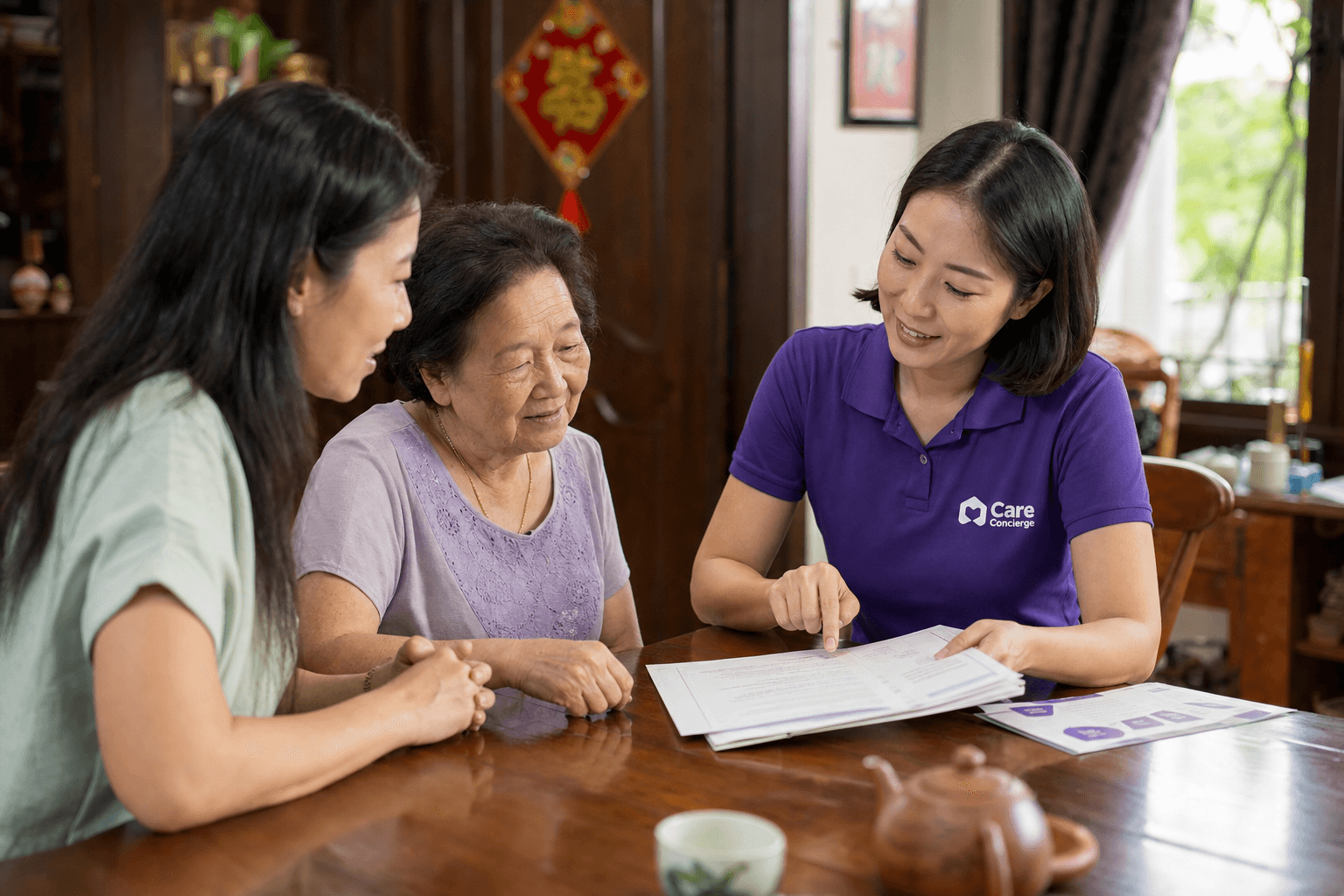
There's a moment most families remember clearly - the realisation that your parent needs more help than you can provide on your own. Maybe it was a fall in the bathroom. Maybe it was the third missed medication this week. Or maybe it was the quiet exhaustion of doing everything yourself, knowing it still wasn't enough.
If you're searching for a caregiver in Malaysia, you're likely in that moment right now. And the hardest part isn't admitting your parent needs care - it's trusting someone else to provide it.
This guide walks you through how to find, evaluate, and hire a caregiver for your elderly parent in Malaysia. Whether you're exploring home care services in Malaysia for the first time or comparing agencies after a bad experience, this is what you actually need to know - not the sanitised version, but the real one.
Where to Find Caregivers in Malaysia
When families start looking for a caregiver in Malaysia, they typically land on one of four channels. Each has trade-offs worth understanding before you commit.
For local options and costs, see our guides to home care in KL and Petaling Jaya, Penang and Johor Bahru.
1. Care Agencies
Agencies recruit, train, and manage caregivers on your behalf. You get a vetted professional, and the agency handles scheduling, replacements, and supervision. The best agencies also provide a dedicated care coordinator who builds a personalised care plan for your parent - not a one-size-fits-all template.
Best for: Families who want reliability, accountability, and professional oversight.
2. Online Platforms (Gig-Style)
Platforms like Homage operate as a marketplace - think "Grab for caregivers." You book a caregiver by the hour (typically around RM30/hour), and the platform matches you with available professionals. It's convenient, especially for short-term or ad-hoc needs. The trade-off is continuity: your parent may see a different caregiver each visit, which can be unsettling for seniors with dementia or those who simply need time to build trust.
Best for: Families who need flexible, short-term support and are comfortable with rotating caregivers.
3. Freelance or Word of Mouth
Many families in KL, Selangor, and Penang still find caregivers through personal referrals - a friend's former nurse, a recommendation from a support group, or a posting on Facebook. This can work well if you find someone experienced, but there's no safety net. If the caregiver falls ill or leaves, you're back to square one.
Best for: Families with strong personal networks who can verify a caregiver's track record firsthand.
4. Hospital Referrals
Some private hospitals maintain lists of freelance nurses or care agencies they recommend to families at discharge. These referrals can be a useful starting point, but they're not always curated - hospitals may refer based on availability rather than fit.
Best for: Families navigating post-surgery or post-hospitalisation care and needing a starting point quickly.
Steps to Find the Right Caregiver
Finding a caregiver for your elderly parent in Malaysia doesn't have to feel overwhelming - but it does require asking the right questions in the right order. Here are six steps to guide you:
- Define your parent's care needs. Start with the basics: does your parent need help with daily activities (bathing, meals, mobility), or do they require medical care (wound dressing, medication management, physiotherapy)? A parent recovering from a stroke has very different needs from one who simply needs companionship and light housekeeping. Write it down - this becomes your brief.
- Decide between live-in and visit-based care. A live-in caregiver provides round-the-clock presence and is ideal for parents who need consistent support throughout the day and night. Visit-based care - where a caregiver comes for set hours - suits families whose parent is mostly independent but needs structured help at specific times. Consider your parent's comfort, your home layout, and your budget.
- Check qualifications and training. This is where many families get caught out. In Malaysia, there is no mandatory licensing for caregivers, which means quality varies dramatically. Ask whether the caregiver has formal training - a certificate from a recognised institution matters. Look for providers who run their own training programmes or partner with universities, as this signals a commitment to professional standards beyond the bare minimum.
- Interview the caregiver - or the agency. If you're hiring through an agency, interview the agency as much as the individual. Ask how they match caregivers to families. Ask what happens if the caregiver is sick or doesn't show up. Ask whether they provide a personalised care plan or simply send whoever is available. If you're hiring directly, spend time observing how the caregiver interacts with your parent - patience, attentiveness, and genuine warmth are not things you can teach in a weekend course.
- Request a trial period. A reputable provider will offer a trial period - typically one to two weeks - before you commit long-term. This gives your parent time to adjust and gives you a chance to observe the quality of care in practice, not just on paper. If a provider pressures you to sign a long contract upfront with no trial, treat that as a warning sign.
- Set clear expectations and communication channels. From day one, establish how updates will be shared. Will you receive daily reports? Is there an app or portal where you can track your parent's care activities, medication, and vitals? Can you reach someone - not just the caregiver, but a coordinator or manager - if something goes wrong at 10pm on a Sunday? The best care relationships are built on transparency, not assumptions.
Red Flags to Watch For
Not every caregiver or care provider is what they claim to be. When you hire a caregiver for elderly care in Malaysia, watch for these warning signs:
- High caregiver turnover. If an agency can't retain its own staff, that tells you something about how they treat their people - and by extension, how they'll treat your parent. Ask directly: what's your average caregiver tenure?
- No training certifications. "Experienced" is not the same as "trained." A caregiver who has worked in homes for five years but has no formal training may not know how to handle a fall, manage medication interactions, or respond to a medical emergency. Insist on seeing credentials.
- No personalised care plan. If a provider sends a caregiver to your home without first assessing your parent's needs, routines, medical history, and preferences, they're not providing care - they're filling a shift. A proper care plan should be documented, shared with you, and reviewed regularly.
- No family communication. You shouldn't have to chase updates about your own parent. If a provider has no structured way to keep you informed - no app, no regular reports, no coordinator you can call - you'll spend more time managing the caregiver than the caregiver spends caring for your parent.
- Reluctance to offer a trial period. Any provider confident in their service will let you experience it before locking you in. Resistance to a trial suggests they know retention depends on contracts, not quality.
Not sure which caregiver or agency is right for your family?
Agency vs Freelance - Pros and Cons
One of the first decisions families face is whether to go through an agency or hire a freelance caregiver directly. Here's how they compare:
| Factor | Agency | Freelance |
|---|---|---|
| Vetting & training | Agency handles screening, background checks, and often provides ongoing training | You verify credentials yourself |
| Backup coverage | Replacement caregiver provided if your regular caregiver is unavailable | No backup - you find a replacement yourself |
| Care coordination | Dedicated coordinator manages the care plan and family communication | You manage the caregiver directly |
| Cost | Higher monthly cost, but includes management, supervision, and peace of mind | Lower hourly rate, but hidden costs in your time and stress |
| Consistency | Same trained caregiver with documented handover if changes occur | Dependent on one individual - risk if they leave |
| Accountability | Formal complaints process, service guarantees | No formal recourse |
For families weighing whether they need a caregiver or a domestic helper, this is an important distinction - the difference between a trained care professional and household help is significant when your parent has medical or cognitive needs. Read more on caregiver vs maid for elderly care.
The short answer: if your parent's care needs are straightforward and you have time to manage someone directly, freelance can work. If your parent needs medical support, consistency, or you simply can't afford the mental load of being a care manager on top of everything else, an agency removes that burden.
What a Good Care Provider Actually Looks Like
It's easy to list red flags. But what does quality care actually look like in practice? Here's what to look for when evaluating a provider - and what separates a care service from a truly personalised care experience.
A dedicated care coordinator. Not a call centre. Not a chatbot. A real person who knows your parent's name, their medical history, their preferences, and your family's concerns. This coordinator should be your single point of contact - someone you can call when your parent has a bad day, when you have questions about their care plan, or when you need to adjust the schedule.
Trained - not just experienced - caregivers. The difference matters. Look for providers who invest in their own training programmes or partner with recognised institutions. Care Concierge, for example, runs a caregiver academy jointly with UTAR (Universiti Tunku Abdul Rahman), producing certified care professionals who are trained in dementia support, stroke recovery, palliative care, and daily living assistance. With a network of over 2,500 care professionals, the depth of training reflects a long-term commitment to professional standards.
A personalised care plan. Your parent is not a template. A good provider will conduct a thorough assessment before care begins - understanding medical conditions, daily routines, dietary needs, mobility levels, and emotional wellbeing. That care plan should be documented, shared with you, and reviewed regularly as your parent's needs evolve.
Family communication built into the system. You shouldn't have to ask for updates - they should come to you. The best providers use technology to keep families informed: an app where you can see daily care activities, medication logs, vital signs, and caregiver notes in real time. Care Concierge's mobile app does exactly this, giving families visibility and peace of mind even when they're not physically present.
Third-party trust signals. Certifications aren't just logos on a website - they represent external validation. Care Concierge became Southeast Asia's first senior care provider to earn B Corp certification, an independent assessment of social and environmental impact. It's one more layer of assurance that the provider operates with integrity, not just profit.
What You Can Do Right Now
You don't need to have everything figured out today. But you can take one step forward:
- Write down your parent's needs. Even a rough list - medical conditions, daily routines, what they struggle with most - gives you clarity and makes every conversation with a provider more productive.
- Talk to a care coordinator. Not a salesperson - a coordinator who will listen first and recommend second. Explore Care Concierge's home care services to see how a concierge-style approach works, or speak to the team directly.
- Ask your family. Care decisions shouldn't fall on one person. Share this article with your siblings, your spouse, or anyone involved in your parent's care. The conversation gets easier when everyone starts from the same information.
Ready to find the right caregiver for your parent?
Dive Deeper
Hiring & Caregivers
Live-In Caregiver in Malaysia - Is It Right for Your Parent?
Considering a live-in caregiver for your elderly parent in Malaysia? Costs, what to expect, and how to decide if full-time care is the right move.

Home Care Guide
Home Care Services in Malaysia - The Complete Guide (2026)
Everything Malaysian families need to know about home care - services, costs, how to choose a caregiver, and what to expect. Updated for 2026.
Home Care Guide
Elderly Care at Home in Malaysia - A Family Guide
Considering caring for your elderly parent at home in Malaysia? Here's what it involves, when to get help, and how to make it work.
Care Decisions
Home Care vs Nursing Home in Malaysia: How to Decide
Home care or a nursing home? Take the four-question check, compare care side by side, and see typical Malaysian costs for each, checked October 2026.
Home Care Guide
Home Nursing Care in Malaysia - Services, Costs & What to Expect
Need medical nursing care at home in Malaysia? Learn what home nursing includes, how it differs from caregiving, and what it costs in 2026.